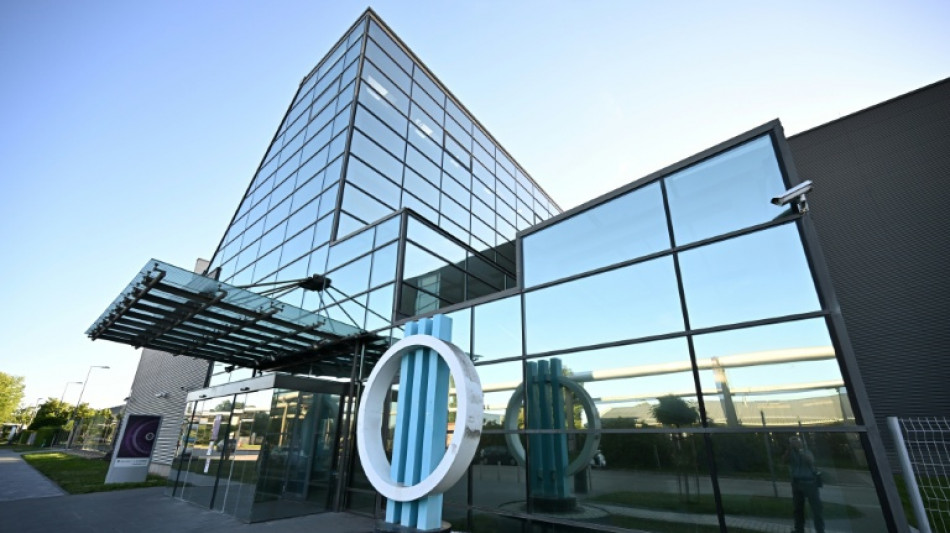
Massive shake-up of Hungary media after Orban's exit / Photo: Attila KISBENEDEK - AFP
One month since Hungary's state broadcaster MTVA suspended its news programmes, employees are still waiting to hear if they will return to work -- and what that work may look like, as the country grapples with a new era of press freedom after the ousting of former premier Viktor Orban.
During his 16-year rule Orban targeted journalists and news outlets and tightened control of state media, leading what the Committee to Protect Journalists (CPJ) described as "one of the most sophisticated systems of media capture ever seen in the European Union".
But Hungary's new leader Peter Magyar, who defeated Orban in April elections after campaigning on a return to democratic norms, has vowed to change the system.
Under Orban, MTVA employed over 2,000 people and received lavish taxpayer funding, with its newsroom unquestioningly echoing the government's narratives.
But under Magyar, MTVA's main channels suspended news broadcasts on July 7, two weeks after parliament passed a media reform bill, apologising in an on-air message for "lying" for years.
"After the election, most of us felt liberated. Political control ceased; we could talk about facts, quote both sides, it felt incredible," one newsroom employee told AFP.
Previously, they were disseminating government politicians' opinions and positions instead of news, the journalist said, speaking on condition of anonymity as staff are not allowed to give interviews.
"It is undeniable that we bear responsibility... Most of us still haven't managed to reconcile this within ourselves," the employee said, adding as "breadwinner" they "could not afford" to quit on principle.
"We feel anxious and hopeful at the same time," another longtime public media employee told AFP.
"Even people who never served any political agenda are worried for their jobs... But we're also optimistic that we can finally serve the public," she added.
- Conservative media hit -
Private media companies are also feeling the effects of the change in administration.
Mediaworks, which describes itself as Hungary's leading conservative media company and is close to Orban's nationalist Fidesz party, announced in June it was firing 200 of its 2,000 staff.
It no longer receives the lavish government spending on adverts it enjoyed under the previous administration.
More than a dozen of the group's daily newspapers have either gone out of print or switched to weekly publication, as flagship outlet Magyar Nemzet did this month.
The independent centre-left rival Nepszava also ceased its print edition in late May due to the debt it accumulated to Mediaworks, which printed the newspaper, leaving Hungary without a political daily.
- Full relaunch -
A relaunch of MTVA is slated for later this month, with several insiders anticipating a return of TV news broadcasting on August 20, the national holiday.
Interim management -- appointed by the government -- has been silent on the details, and multiple employees told AFP that they are relying on internal rumours and occasional press statements for updates.
Camera crews are still recording events deemed newsworthy, but the footage is archived without being broadcast.
The ministerial commissioner overseeing the current transition, Judit Grosz, told AFP that "serious and longstanding" problems with credibility and professional standards necessitated the shutdown.
Inside MTVA, reactions were mixed.
Many said it was important to "break with the previous era", while some viewed the blackout as pointless, since news broadcasts had already adopted what they said was a neutral tone after Orban's defeat.
- Litmus test -
The current transition is seen as a mere prelude.
A new chief executive, chosen later through an open tender process, is expected to implement recommendations from an ongoing professional and public consultations.
"The goal ultimately is to have the audience see public media as a trustworthy, professionally run and genuinely public service institution," Grosz said.
But earlier this month, MTVA faced a backlash after naming a new head of news programming who had previously been employed by media outlets and companies owned by Orban's inner circle.
The public broadcaster reversed the appointment the next day after much disapproval -- including from Magyar -- prompting even more criticism.
"It is not up to the prime minister to comment and decide on nominations," Reporters Without Borders (RSF) regional director Pavol Szalai told AFP.
Orban's Fidesz party leveraged the case as part of its broader efforts to cast Magyar's ongoing reform drive as "authoritarian".
The CPJ also issued a broader warning last month, saying that if Magyar succeeds Hungary could become "a role model... But if the reforms do not go deep enough, or one party's control is simply replaced by another's, the opportunity will be squandered."
Grosz has denied any government interference.
RSF's Szalai said the litmus test on the reforms will be if public media "dares to criticise Magyar's government on a factual basis".
R.Leitner--NWT