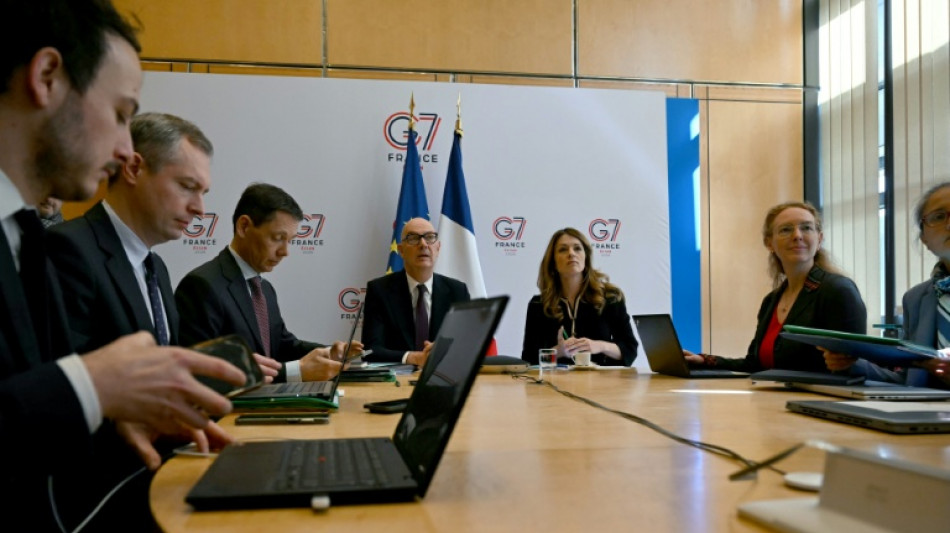
G7 ministers pledge 'necessary measures' to ensure stable energy market / Photo: Anna KURTH - AFP
G7 economy and finance ministers Monday said they stood ready to take "all necessary measures" to ensure the stability of the energy market as they tackled the economic consequences of war in the Middle East.
The United States and Israel launched strikes on Iran in late February, and Tehran has hit back by targeting crude-exporting countries in the region and halting most shipments through the Gulf.
The squeeze on supply has pushed oil and natural gas prices higher, with drastic knock-on effects for supply chains in multiple industries.
"We stand ready to take all necessary measures in close coordination with our partners, including to preserve the stability and security of the energy market," G7 energy and finance ministers, as well as central bank governors, said in a joint statement.
"We recognise the importance of coordinated international action to mitigate spillovers and safeguard macroeconomic stability."
They said they continued to monitor developments and their potential impact on global growth, and financial market conditions.
The G7 ministers also called on all countries to refrain from imposing unjustified export restrictions on hydrocarbons and related products.
The G7 -- an informal grouping of the United States, Canada, Britain, France, Germany, Italy and Japan -- helps shape policy debates in the world's wealthiest nations.
France currently holds the rotating presidency of the G7 advanced economies.
"What's happening now in the Gulf is having energy consequences, economic consequences, financial market consequences and potentially inflation consequences," French Finance Minister Roland Lescure told reporters ahead of the meeting, which he chaired.
The United States has sought support from the group to help halt Iran's blockade of the Strait of Hormuz shipping route.
After a meeting last week, G7 foreign ministers said it was an "absolute necessity" for Iran to re-establish free passage through the strait and called for an end to attacks on civilian infrastructure.
- 'Act quickly' -
Under increasing pressure, many governments have rolled out measures to limit the impact of supply difficulties and soaring energy prices.
On Friday, the French government announced it would spend 70 million euros ($80 million) to help the fishing, agriculture and transport industries in April.
Lescure said on Monday that measures of support should be targeted and rapid.
"This is a crisis that affects all of us and that will result in costs for the nation," Lescure told reporters.
We need to "act quickly and act fairly," he said.
US officials, including President Donald Trump, have said their goals in the war are almost achieved, but thousands of US personnel have been sent to the region in an unprecedented military build-up.
Activists based outside Iran say the US-Israeli campaign has killed more than 3,000 people in the country, over half of them civilians, while Lebanese officials have said more than 1,000 have been killed there since Israel began attacking its territory in retaliation for Hezbollah attacks on March 2.
Officials in Israel and countries across the Gulf have also reported much smaller numbers of casualties.
A.Fuchs--NWT