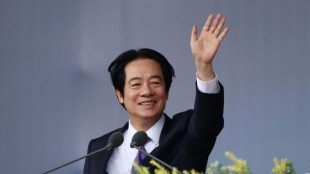
UK PM Starmer vows to fight on after local polls drubbing / Photo: Mark NAFTALIN - AFP
Keir Starmer vowed Friday to remain as Britain's prime minister after disastrous local elections saw his centre-left Labour party humiliated across the UK with disillusioned Britons backing hard-right and nationalist parties.
Thursday's ballots -- Starmer's biggest electoral test since Labour ousted the Conservatives in 2024 -- left the UK leader under intense pressure after the party suffered a historic loss in its Welsh heartlands.
It was also decimated by Nigel Farage's anti-immigrant Reform UK party across England, and failed to make any inroads into Scottish National Party (SNP) dominance north of the border.
But Starmer, who has faced calls to quit from rival party leaders and some Labour MPs for months, was adamant he was "not going to walk away and plunge the country into chaos".
"The results are tough, they are very tough, and there's no sugarcoating it," the 63-year-old said, adding "it should hurt, and I take responsibility".
Several cabinet members voiced support for him, with no obvious alternative leader appearing to reduce the peril of a challenge.
Farage, whose upstart party has led national polls for over a year and took control Friday of a string of councils, claimed the elections illustrated a "truly historic shift in British politics" and predicted Starmer would be ousted within months.
- Missteps -
Labour took power in a landslide 2024 general election victory, but has since failed to fulfil its main promise of spurring economic growth and has been plagued by policy missteps and scandal.
Britons still suffering from a cost-of-living crisis appear to be flocking to insurgent parties as a result.
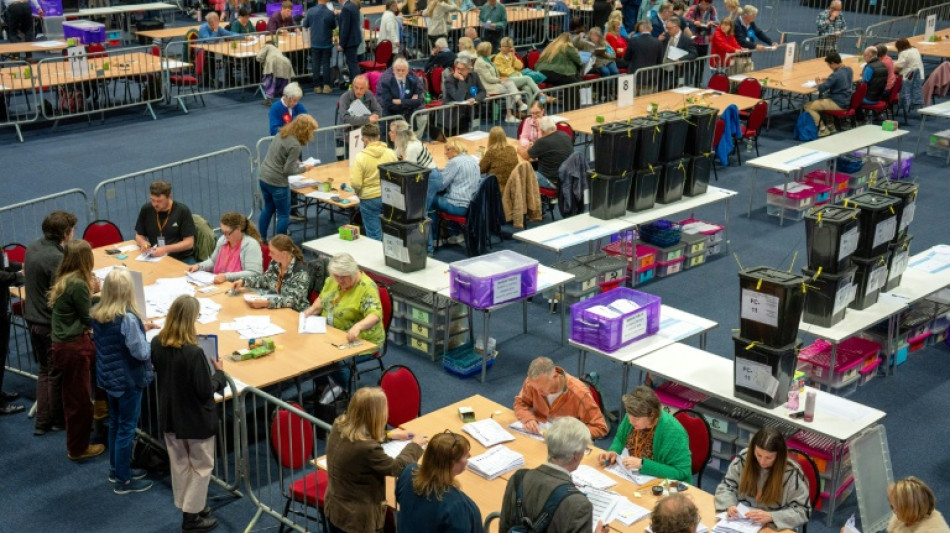
Thursday's vote decided around 5,000 local council seats, out of 16,000 in total across England.
By Friday evening with 117 of 136 councils reporting, Labour had lost nearly 1,200 councillors and 27 councils, while Reform had gained more than 1,300 local lawmakers.
Farage's party had seized control of 13 councils -- including historic Labour-controlled places like Barnsley in northern England and Sunderland in the northeast.
The Greens, which have veered left under the leadership of self-described eco-populist Zack Polanski, saw 413 councillors elected and won control of several councils, including Hastings in southeast England.
Hailing the elections of two mayors in the London boroughs of Hackney and Lewisham, a key Green target area, Polanski called two-party politics "dead and buried".
Pollster John Curtice said the results illustrated a new fragmentation of British politics.
Those backing Reform were "broadly people with a relatively socially conservative outlook" who had "lost confidence in the traditional mainstream parties" and were sympathetic to the party's views on issues such as immigration and Brexit, he said.
London finance worker Ian Tanner said he disliked Starmer's "dreadful policies" but was fearful any replacement might be "even more left wing".
Another finance worker, Dayo Foster, 60, said she believed Labour was doing "all the right things" and that Starmer just needed more time. "I think we need a bit of stability".
- Welsh humiliation -
In Wales, the party lost control of the devolved government for the first time since the parliament in Cardiff was established 27 years ago.
Nationalists Plaid Cymru, which wants independence for Wales in the long-term, won 43 seats -- falling short of a working majority.
Reform were second on 34, leaving Labour trailing in third with just nine seats, a humiliating result for a party that has dominated Welsh politics for a century.
In Scotland, SNP leader John Swinney declared his party was on track to be the largest, but -- as in 2021 at the last elections -- it looked set to fall short of a majority.
With 91 out of 129 seats declared, the party had secured 55 -- on a reduced vote share of around 38 percent -- with the other parties trailing on single figures.
With just over half the results declared in the capital, the Greens and Lib Dems had each gained dozens of councillors.
A.P.Seidl--NWT