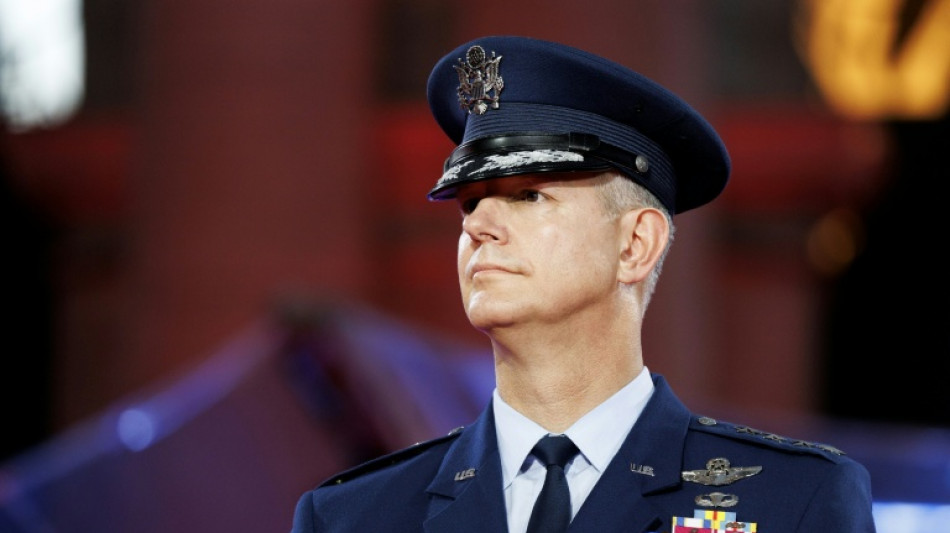
Top NATO commander warns Russia any attack would be 'futile' / Photo: NICOLAS MAETERLINCK - Belga/AFP
NATO's top military commander said Monday the alliance would "block, blunt, and break" any attack on its members, in a warning to Russia as fears grow over the threat from Moscow.
"If someone is foolish enough to attack us, we will fight. We will stop the attack and deny them the ability to achieve their objectives, whatever those may be," US General Alexus Grynkewich, NATO's Supreme Allied Commander Europe, said in a speech in Warsaw.
"We will, in short, ensure any attack against any ally proves utterly futile."
Grynkewich elaborated what he called his "theory of victory" to defeat an armed attack on the alliance as worries surge over what Western officials call a "hybrid" campaign of sabotage and interference by Moscow.
"Let me make one point very clear: I do not assess that conflict is imminent or inevitable. It isn't," Grynkewich said.
Worries have grown in recent months that the Kremlin is stepping up actions in Europe after high-profile incidents including the discovery of an explosive-laden drone at a German airport.
Grynkewich said that NATO allies needed to quickly attribute blame to Russia once they have proof and should let Moscow know clearly it cannot push too far.
"It's important that allies continue to consult, think about how we might respond, and make sure that we message clearly and concisely to the Russians where our red lines are," he said.
NATO insists it is a purely defensive alliance and is not seeking to invade Russia.
Grynkewich said that if there is a larger attack, NATO would act decisively to halt its foes and then destroy their ability to keep fighting if needed.
"My theory of victory is simple: we will block the initial attack. If the attack persists, we will blunt it and prevent enemy advance," he said.
"And if required, we will break the enemy's forces and the operational warfighting system that is arrayed against us."
- 'Burden of escalation' -
The commander said that NATO would then not seek to "escalate" -- in an apparent reference to the use of nuclear weapons.
"The burden of escalation would rest squarely upon the aggressor; they and they alone would bear the full moral, political, and strategic weight of deciding whether to do so," he said.
The strong message from NATO's top commander comes at a time of potential vulnerability for Europe.
The uptick in Russian activity comes as allies are bracing for possible cuts to US forces in Europe as the US administration reviews its deployments on the continent.
The results of the process are expected to be announced towards the end of the year.
European countries are already rushing to bolster their militaries as doubts have soared over the reliability of the United States under President Donald Trump.
Grynkewich insisted that Washington remained firmly behind the alliance's mutual self-defence pledge.
"I think no one should question the commitment of the United States to this alliance," he said.
He said the European push to take more responsibility for its defence was making the alliance tougher and more capable.
"We're in the implementation phase, and that is driving a stronger and more united alliance than I've seen in a long, long time," he said.
L.Pichler--NWT