Trump admin makes major cut to endangered species protections
President Donald Trump's administration will no longer treat the unintentional killing of protected wildlife as unlawful, officials confirmed Thursday, in a shift conservationists say could gut the Endangered Species Act (ESA).
Under the sweeping new directive, deaths resulting from foreseeable risks posed by activities such as commercial fishing or logging will be exempt from the landmark 1973 law.
"What's being put forward by the Trump administration is going to cut the heart out of the Endangered Species Act," Gib Brogan, campaign director for Oceana Fisheries, told AFP.
He said the law had been successful at saving species for five decades by finely balancing human economic needs against conservation.
The September 14 memorandum, posted online by the nonprofit Center for Biological Diversity and confirmed to AFP by the administration, redefines the longstanding definition of "take" -- a term that relates to pursuing, killing or capturing of a species.
It is now confined to "affirmative conduct intentionally directed against a particular animal or animals."
The move, first reported by the New York Times, explicitly cites a dissent by the late Supreme Court justice Antonin Scalia in a 1995 case on the matter.
"A vessel that inadvertently strikes a whale has not taken it, because the vessel's course was not set against the whale," the document says, quoting the conservative justice.
"Felling a tree is not a take of the bats roosting in it unless the tree is felled for the purpose of killing or capturing them," it continued.
In that case, known as Babbitt v. Sweet Home, an association of landowners and loggers tried to challenge the prevailing definition of "take," arguing a species of woodpecker and an owl had injured them economically by preventing them from conducting their business.
The Supreme Court ultimately ruled against them in a 6-3 decision -- but the high court has since shifted considerably rightward.
- 'Performatively cruel' -
The new memo was signed by Brian Nesvik, director of the Interior Department's Fish and Wildlife Service.
The department confirmed the document's authenticity to AFP and linked the move to a recent major rule change that redefined how "harm" is interpreted under the ESA, removing habitat destruction.
"The memorandum accurately reflects the US Fish and Wildlife Service's guidance for implementing the Endangered Species Act following the final rule rescinding the regulatory definition of 'harm,'" the department said.
"Under the guidance, the ESA's prohibition on 'take' continues to prohibit conduct including harassing, pursuing, hunting, shooting, wounding, killing, trapping, capturing or collecting protected wildlife," it added.
The administration's move is the latest in a series of steps to weaken the ESA, which have faced various legal challenges.
In addition to redefining "harm," the administration has halted the automatic application of endangered species protections to those listed as "threatened."
It now also requires the government to consider economic and national security tradeoffs when deciding whether to designate a particular area as "critical habitat."
Brett Hartl, government affairs director for the Center for Biological Diversity, said it was highly irregular to write a memo -- which are "non-binding" -- to attempt to extend the scope of rule changes, which are binding.
"Performative cruelty is the point," he told AFP, adding the center was weighing its legal options but would "aggressively challenge it."
Brogan, of Oceana, said his group was "very concerned what this is going to mean for sea turtles, for corals, for threatened and endangered whale species."
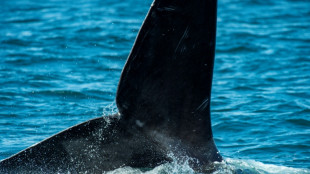
The North Atlantic right whales would be one of the main species threatened by the changes. There are only around 380 of them left, and their main threats come from entanglement in fishing gear and collisions with ship traffic.
C.Fink--NWT